Sunday, July 25, 2010

Technology!...And our bodies?


I originally thought it was an interesting topic to discuss the importance of technology to learn more about the different systems of the body. Don’t we need to know about the body in order to create a solution? Well, I was only part right. After researching, it began to make a lot more sense. Inventors/scientists need to have knowledge to base their technology on, but when they make prototypes, things don’t always go as planned. They will encounter problems along the way, and thus, need to keep re-modifying their plans. In situations like these, more things are learned about the body and its limits are tested.


Technology is crucial to our understanding of the different systems of the body. Ultimately, all body systems are intertwined and interdependent to form the complex system that is the human body. Our digestive organs would not work if the circulatory system did not do its job to supply blood and oxygenate the cells, so that their functions can be carried out. Trying to implant an artificial lung, some consideration needs to be done about how the rest of the body will accept it. In learning how to suit other parts and components of the body, we gain more knowledge. Let’s examine this idea with the case of the artificial heart, from various cases of artificial heart use throughout the years.

In March of 1983, it was reported in the L.A. Times that the first recipient of an artificial heart died 112 days after the implantation. The article is in the archives which means you’d have to pay to read the entire article, but from what I could read, he had gone through a series of setbacks from a permanently implanted heart. The artificial heart still needed to be refined and continued to do so, up until today and beyond.

In August of 1985, a man in Arizona was given a Jarvik-7 (shown below) artificial heart, the first authorized artificial heart used temporarily for those waiting for a heart donor. In October of the same year, a man was given an improved artificial heart compared to the Jarvik-7. This advanced heart was designed to reduce blood clotting, but despite this, the man went into critical condition the next day, going into stupor as the blood vessels leading to the brain were constricting. He lasted long enough to receive a donor heart, but died 18 days later, after suffering an inflamed pancreas and fevers.

In 2006, hearts were meant to help patients live long enough to get a heart donor. A fully implantable heart was created, except there was a problem—it didn’t have a pulse. Previous models of hearts used pumps to create a pulse that pumped blood throughout the body. The idea of whether having a pulse or not would affect the human or animal were debated. Some said that not having a pulse would mean the small capillaries would not get blood, resulting in organ failure. Others said that continuous flow devices are equally as safe as pumps that pulse. I have not found an updated article on this topic, or whether their research proved it fit to use in humans.

Now moving forward to September 2009, not too long ago, Abiomed created a self-contained heart that runs on battery. The procedure will cost $250, 000, which is double the price of a heart transplant in the United States of America.
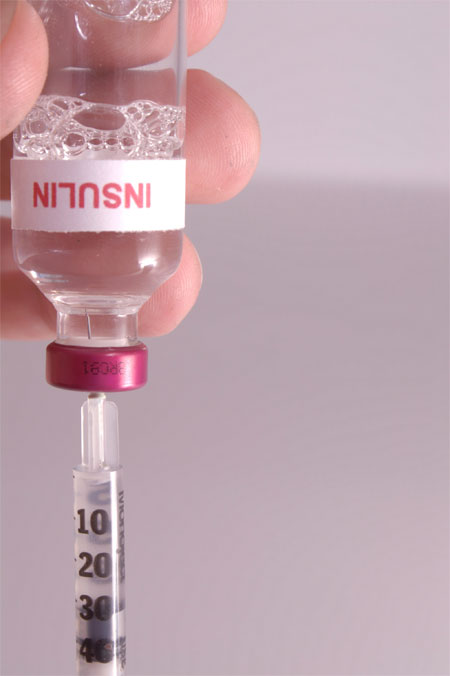

The journey to find the perfect heart involves lots of research, and in research we make discoveries. Take the case of diabetes, where not much was known about the disease, and was often referred to as the “sugar sickness”. Researchers Banting, Best, and their research team discovered insulin. Insulin explained the disease and the cure. It was discovered through testing of blood sugar and extractions from the pancreas that began to work miracles on diabetics, who would have otherwise died. Although not part of the digestive, circulatory or respiratory system, bionic eyes are also being developed to help the blind.


An article in 2003, stated that putting in electronics into the eye, a corrosive environment, could be a problem. Devices that are not biocompatible could cause major tissue reactions. But with technology advancements and research, some predict that the eyes could be fully ready by 2011. In a recent article, a toddler’s parents are fighting for an artificial cornea to save their daughters life, who could be blind before the age of 3. Technology really does improve our knowledge of how the human body works and all its internal components. But like all good things, technological “cures” should only be used on patients who need it, instead of people who want to be perfect or superhuman.

But aside from the main topic, all this talk about the future of technology, with bionic eyes, artificial hearts, bionic limbs…artificial everything really got me thinking. Some fictitious stories talk about the future—of a battle between the human race and robots. Something that I’ve never thought of was Who’s side am I going to be on? With the advancements in technologies, we just might be those robots (well probably not us, but further down the family tree). That scares me, despite that it would so cool to be a real Transformer! All these idioms we use in today’s society would take on a whole new meaning. Your heart is artificial, so what could you possibly feel there? You would not be looking into the eyes of the one you love, but into a silicon chip. Would we really be human? From all these articles about the heart, I’ve realized that the best is natural, and nothing can really beat the human heart, SO TAKE CARE OF YOURSELF AND BE SURE TO EAT YOUR VEGETABLES!

Sources
http://www.nytimes.com/1985/08/30/us/arizona- man-gets-artificial-heart.html
http://pqasb.pqarchiver.com/chicagotribune/access/25074334.html? dids=25074334:25074334&FMT=ABS&FMTS=ABS:FT&type=current&date=Nov+15%2C+1985&author=Chicago+Tribune+wires&pub=Chicago+Tribune+(pre-1997+Fulltext)&desc=1ST+TO+GET+PENN+STATE+HEART+DIES&pqatl=go
http://pqasb.pqarchiver.com/latimes/access/679785852.html?dids=679785852:679785852&FMT=ABS&FMTS=ABS:AI&type=historic&date=Mar+24%2C+1983&author=&pub=Los+Angeles+Times&desc=First+Recipient+of+Artificial+Heart+Dies&pqatl=google
http://www.mirror.co.uk/news/top-stories/2010/02/16/to-s-bionic-bid-to-beat-blindness-115875-22045883/
http://www.wired.com/medtech/health/news/2003/07/59634>

Monday, July 12, 2010

Today we're looking at.... ANOTHER problem! That has to do with being inhumane or not! Sort of. This time, we’re going to talk a little bit about artificial selection! How fun! So basically in artificial selection, you pick out the traits and characteristics of a plant or animal. Not as in a catalogue like you’re shopping, but it is the selective breeding of organisms for a desired trait. So say you wanted a dog that didn’t shed as much, you’d cross breed two dogs that don’t shed that much and voila, a dog that doesn’t shed as much! Though it may never come out as planned, there would be a higher possibility than if you were just randomly going to breed two random dogs and just hope for one that didn’t shed as much.

It’s kind of ridiculous how we’re doing these things. Like, it’s good that we’re finding new scientific discoveries every day, but think about it. The more that we know the more complicated things get and the more questions we have. Think 50 years back, around when our parents were born, things were so much different! Everything was much more simple and not as complicated as today. I know as we move forward, so should the things we do. But really, some things are unnecessary for everyday life.

I know that it can be a lot easier, but for every action there is a reaction. There are a lot of things in our life that we go to the extremities for. Say, watching tv. We watch it, your friends watch it, your parents watch it, maybe even your dogs watch it. Watching a little bit of television is okay, it relieves yourself of stress, but some people (like me) like to watch it SOOOO much that it sometimes feel like it’s a chore! See, that’s too much, and we know it, but we don’t really care for it. Everything starts out as a very small thing, just looking for a little relief or to help out a little, but then it turns into something so big, we have to question it. For instance, farmers started making their crops disease resistant by genetically modifying their plants. They were thinking of their families, people they had to feed, and if their crops somehow became disease infested, what would happen to their income? They would get nil, zilch, nada. So I can understand that. Then there are natural selections for dogs? Like…. Wow, do you really care that your dog is a pure bred? If you want a dog, you shouldn’t need to search for a pure bred just because they would be good at certain things or have certain characteristics. You should love them for who they are!

Everything in our lives are all tweaked. Maybe in a little way, or a huge way. Our food is not organic, unless you’re SEPCIFICALLY buying organic things. But honestly…. We shouldn’t have the choice of organic or inorganic. Our groceries should be all organic, because it’s a healthier choice. The thing is, though, is that not many people knew there was such a difference between organic and inorganic. Take me for instance, OF COURSE I knew there were two different types, but I never really realized that we were eating inorganic foods from the stores and I didn’t know that there could be something even healthier than vegetables from the grocery store, it’s ORGANIC vegetables.

We’re making things easier for us, sure. Featherless chickens? Sure, no problem… NOT! Seriously. We’re always looking at a perspective, OUR perspective. How is this going to benefit us, how is this going to affect us? Well, let’s look at those featherless chickens. Just so we don’t have to go through the nuisance of plucking them, their nakedness makes them more vulnerable to sunburn, such parasites and mosquitoes. The roosters are unable to mate because they can’t flap their wings as the mating ritual. And as people say, if it’s not broken then don’t try to fix it. We need to learn that sometimes the harder way is worth it and that the harder way could be easier. You might end up with something mutated from artificial selection, so just stop and make things normal.

Sources:
http://www.answers.com/topic/artificial-selection
http://evolution.berkeley.edu/evosite/evo101/IIIE4Evochange.shtml
http://wiki.answers.com/Q/What_are_the_advantages_and_disadvantages_of_artificial_selection

Blogs Commented On:
Tammy Nguyen
Angela Nisce

Monday, June 7, 2010

Biosolids...?

So, biosolids, are we talking about poop here? When we treat the domestic sewage in a treatment facility, where it is treated and processed, a nutrient-rich and organic material is produced. This nutrient-rich organic material can be recycled and used as fertilizer to help maintain and improve planting soils and help in plant growth. Hm, but what’s the difference between biosolids and sludge? Well, for one thing, one sounds like something a smart person would use, as it sounds smart, useful, and not dirty, and the other one sounds like something that is just dirty. But what’s the real answer? Well, sludge is what biosolids are before undergoing the treatment and process. Wow, who knew that our fecal matter could be used for this? I mean… It has to be smelly and gross right?

Well, it would be smelly, but you know, the best things for life do tend to be on the smelly side.

Some of the cons include the smell. Depending on the treatment it goes through, it could be from an uncomfortable smell to a foul smell. Mostly because it contains sulphur and ammonia, which are both plant nutrients so nothing can be done. I can’t really think of another con, except for those who use the crops that are fertilized with biosolids. Like in Accra, they eat salad that was fertilized with urine and human manure, they could be at risk from the polluted water. They might not wash their lettuce or whatever they grow right, so it could be bad for them.

So what are the pros of this whole propaganda? Well, first off. It’s recyclable! Isn’t that what the world is trying to aim for? Recycle this, recycle that! I think we’ve been trying to make everything so recyclable, that we’re actually creating MORE things that can be tossed away (ie. Green bins, really? Even if they are recyclable too…). But you know what, this is something that’s going to come no matter what (unless the anatomy of a human changes and we no longer have to excrete waste, that would be amazing) then this is really good! In Canada, we do use biosolids to fertilize crops, and I think this is a major pro. Not only is it recycling our mandatory waste, but it’s helping us in feeding us again with the crops that use this to grow. The circle of life, just like we learned from watching the Lion King.


More pros of using biosolids is that we can use it for mine reclamation! Woohoo! And what is this? Mine reclamation is when they restore the land for useful purposes. So if we used biosolids for mine reclamation, we could use the land once again for proper vegetation. Another pro is to promote the rapid growth of timber in forestry, in which the harvest of an important recourse is quicker and more efficient, now what do you say to that? It’s miracle growth! Who knew our poop could be miracle growth? We could also use biosolids for composting, and can be used on lawns and home gardens, and it’s easy an easy substance to store, transport and distribute, so it shouldn’t be a problem… The neighbours might mind though, it does sort of smell! There is also a study that has show that when human feces is collected and sealed up so that it goes through anaerobic digestion, it produces biogas as a side effect, and can be used as fuel for stoves, heating systems, and even to power cars!

In China, they plan on powering 50 million households on biogas systems! That is a lot of homes, and a whole lot of awesomeness, in my opinion. I’m all for the green way. In Uganda, the farmers are even learning how to make biogas with human feces and other organic waste. In Sweden, they’re even using a super formula of human excrete and rotting animal carcasses and even run trains on it! Our world is getting better, believe it or not, and I’m all for it.


I think that the pros truly weigh out the cons. Our major con, the smell, is not really a health issue, and even then, farmers and the treatment facilities are placed strategically not to be smelled by the public, and the part about getting something from not washing the crops properly, that can be easily solved by well, washing them properly! With the pros, we’ve got that recycling thing going on, we’ve got our crops and trees to grow faster, we’ve even got gas to help fuel mechanisms to cook, heat, and power cars and houses! About the undertake of our western eyes of using human waste to grow our food… I think many do think it’s unsanitary and a disgusting nuisance. But you know what, it’s been approved, and proven healthy, and not a hazard. Not many people will search up if their food has been grown using biosolids anyways, so what they don’t know can’t hurt them. Besides, let’s try and see if they could come up with a better idea, because I doubt they can. Biosolid is in all its stinky gloriousness and will sweep them off of their seats.

Sources:
http://seemikedraw.files.wordpress.com/2008/05/whoopsie21.gif
http://www.guardian.co.uk/environment/2008/jan/17/waste.renewableenergy
http://www.worldwatch.org/node/5394
http://www.cwwa.ca/faqbiosolids_e.asp
http://www.perc.ca/PEN/2001-02/s-mills2.html

Commented on:
Princess Cabrera
Angela Nisce

Tuesday, February 16, 2010

That designer bag is SO cute! I have to have those designer shoes. That designer dress is BEAUTIFUL. This designer sale is the best thing on earth! Awwww, those designer babies are so adorable!


……………

Hold up! Have you gone insane?! Designer BABIES?! What in the world! Humans are NOT accessories. You don’t wear them, and they’re definitely not supposed to be for show! So who in the world would go as far as to genetically modify a little human being who has no say in their own life?

What exactly is a designer baby? Well, it’s a term that the media uses about scientists and doctors being able to actually genetically modify an embryo’s genetic make-up to change their cosmetic characteristics. Isn’t that insane? Surely no one would go as far as that…

I understand the need to genetically modify their children for medical reasons. But that’s only because they need it, or else they would be born defected and imbalanced to a point where they could no longer live a normal life, or would have to be taken care of for the rest of their lives. But to go and modify them (I prefer the word mutate, it’s more fitting) for their looks, now that’s ridiculous. You are taking away their individuality, their unique sense of person. If I found out that someone had messed with my genes for cosmetic reasons… How pissed off… I can’t even explain it!

Some couples go through InVitro Fertilisation (IVF) which is basically fertilising chosen eggs with the sperm in a ‘test-tube’ outside of the mother’s womb to reduce chances of genetic disorders, or, they screen the embryos for a genetic disease and only implant selected embryos back into the womb, which is called Pre-implantation Genetic Diagnosis. These things, I have no problem with, because they’re trying to avoid a bad situation, and might as well subtract the small number from the equation before it is plugged into the main equation, right?

But you know what, that song, “I’m a Barbie girl, in a Barbie world!”… That would come true! We live in a man-made society, have you realized? And wouldn’t it make sense to be a Barbie girl in the midst of a Barbie world? Everything looks like it’s perfect but really, it’s not, it’s plastic, easily torn down and destroyed. Our perception of beauty is already distorted as it is, but imagine with the 'perfect' humans around, it'd be even more disastrous.


Some have argued that this is unnatural, immoral, and a violation of God’s laws. They believe that we are a different for a reason, and to try and change this with our own hands, instead handling it naturally, it’s wrong. Sure, it could start with changing little things, like our hairline, our earlobes, but eventually it would go on to changing our height, our artistic abilities, athletic abilities! The world would be competing at who has the better genes. The world will become even more catastrophic than it already is!

Our technology in the 21st century is advancing, and fast. Not that long ago, there was no such thing as a computer, yet a HAND-held computer (aka a laptop) and a hand-held phone (aka a cellphone). It’s almost as if we’re getting in over ourselves. C’mon, genetically modifying our children for vanity uses? In our society, we want to be beautiful. But naturally beautiful. Haven’t people realized this? Modifying a baby before they are born is no better than getting plastic surgery and claiming to be better looking or being able to do things better. It’s just the difference of being able to see the before and after when you get your surgery. It’s also wrong, the genetic modifications, because that child had no say in the matter, while plastic surgery, that’s all up to you.


I’m all for genetically modifying your genetics because of health risks, but other than that, it’s definitely ridiculous. That child will become ridiculed; with parents who had thought their child not be born good enough for them, so they had to go ahead and choose what their child to look like, like choosing that colour of sweater out of the catalogue. You can’t even trust that, because sometimes the colour in the magazine is so not the colour you wanted. That could turn out the same, trying to adjust your child’s looks.

So all in all, designer babies for vanity reasons? No way! Medical reasons, go for it! My arguments may not be able to change everyone's minds, but at least hear me out and think about it before you kill your child's pride in their own body before they even had a chance.

http://www.bionetonline.org/English/content/db_cont1.htm
http://en.wikipedia.org/wiki/Human_genetic_engineering
http://www.ag.org/top/beliefs/contempissues_14_genetics.cfm

Blogs commented on:
Angela Nisce
Rosemary Ku

Monday, January 4, 2010

Oh worlds~

Biodiversity? What in the world is that? Well, think of what the words ‘bio’ and ‘diversity’ mean. Bio, meaning living things, and diversity, basically meaning different or a variety. Biodiversity, to put in simple, is the variety of living things.


Biodiversity is a word that not many people would care about in the real world, where most go on and live for themselves and their family. But in true reality, biodiversity is not just a word, but it is a system that controls nature and affects not only us, but everything living thing around you. Yes, this includes us, too. When you’re generalizing how our ecosystems work, most just factor in the pros and cons of humans, not many sit and think, ‘hey, what about the other living things here like plants, mosses, animals, fish etc.’. But as a Biology student, it’s come to my attention that even the littlest things can affect many, many different types of species.


For an example, an endangered species in Ontario, the small-mouthed salamander; its habitat is being destroyed and altered so much that it can’t adapt to the new surroundings. The small-mouthed salamander can be found in the Peelee Island in Canada, and is found to breed during the spring in and along streams, temporary pools and flooded ditches. When it is not breeding, the Small-mouthed Salamander can be found living from moist areas mixed with pines and deciduous forests to tall grass. The Small-mouthed Salamander is endangered because we humans decide we can just destroy forests, thinking that they are only plants and trees, but they’re also living things with a various amount of species using that particular forest as their home. As humans cut down the trees, the canopy that covers temporary pools of water, where the Salamander breed, is being dried up way too quickly.

Range map of Ontario where the Small-mouthed Salamander can be found..


When we’re using a piece of paper, think about what nature has gone through, just to get you to that one piece of paper. You’ve got machines, machines that tear down trees to first make a path or a road if you will to get to more trees. While tearing down a path for trees, that machine is also tearing down many species homes! Altering them dramatically. As they tear down more trees to cut down, they are creating wide spaces that may have been needed as breeding grounds for another variety of species.


When you think of salamanders, you say, 'hey, what the heck do they do for US anyways?!' Hmmm, well, for one thing, they might not be helping us DIRECTLY, but indirectly. They help us keep the number of ‘pests’ down such as worms and slugs, but more importantly, they are the prey for bigger animals, in which those are prey for bigger animals and so on, and in time, one of those predators may be one of our prey, it’s the circle of life, just as with any other animal.


It’s quite sad, actually. Do you know how much it’s affecting the poor animals? From firsthand experience, I’ve seen too many animals running across the streets at night when they belong in the forests, hidden in the night, not going across main streets, behind houses! It’s quite a scary thought, but then again, I guess they’re trying to tell us something then, huh? Something among the lines of “HEY, you get to take over our homes, our surroundings, and ruin our lives, so why can’t we sleep in your backyard and eat your leftovers that you so kindly leave out?’ Hah, yeah, that’s exactly what they’re trying to say to us.


So stewards of this world, let me think. NO, not really. No, not at all! We’re ‘trying’ to reverse our actions, but I’m kind of thinking it’s worsening it. How many green bins did they have to make so that WE ourselves can be green, hmm? Tons and tons and toooooons of them, that’s a lot of plastic! We are reusing them, I guess…. The human population can be really stupid at times, but I guess God will spare us since it’s out of our ‘good and repenting’ souls. It's good that we're trying to reverse the effects of our doings for the past whatever years, but obviously it's not enough...


References:

http://animaldiversity.ummz.umich.edu/site/accounts/information/Ambystoma_texanum.html

http://www.rom.on.ca/ontario/risk.php?doc_type=fact&id=92&lang=en http://cfs.nrcan.gc.ca/subsite/glfc-amphibians/ambystoma-texanum http://www.mnr.gov.on.ca/en/Business/Species/2ColumnSubPage/276504.html

Picture sources:

http://www.rom.on.ca/ontario/risk.php?doc_type=map&id=92

http://cfs.nrcan.gc.ca/images/7139

http://www.maniacworld.com/wood-chopper-from-hell.jpg


Blogs commented on :

Tammy Nguyen

Erika Bautista