
I originally thought it was an interesting topic to discuss the importance of technology to learn more about the different systems of the body. Don’t we need to know about the body in order to create a solution? Well, I was only part right. After researching, it began to make a lot more sense. Inventors/scientists need to have knowledge to base their technology on, but when they make prototypes, things don’t always go as planned. They will encounter problems along the way, and thus, need to keep re-modifying their plans. In situations like these, more things are learned about the body and its limits are tested.
Technology is crucial to our understanding of the different systems of the body. Ultimately, all body systems are intertwined and interdependent to form the complex system that is the human body. Our digestive organs would not work if the circulatory system did not do its job to supply blood and oxygenate the cells, so that their functions can be carried out. Trying to implant an artificial lung, some consideration needs to be done about how the rest of the body will accept it. In learning how to suit other parts and components of the body, we gain more knowledge. Let’s examine this idea with the case of the artificial heart, from various cases of artificial heart use throughout the years.
In March of 1983, it was reported in the L.A. Times that the first recipient of an artificial heart died 112 days after the implantation. The article is in the archives which means you’d have to pay to read the entire article, but from what I could read, he had gone through a series of setbacks from a permanently implanted heart. The artificial heart still needed to be refined and continued to do so, up until today and beyond.
In August of 1985, a man in Arizona was given a Jarvik-7 (shown below) artificial heart, the first authorized artificial heart used temporarily for those waiting for a heart donor. In October of the same year, a man was given an improved
 artificial heart compared to the Jarvik-7. This advanced heart was designed to reduce blood clotting, but despite this, the man went into critical condition the next day, going into stupor as the blood vessels leading to the brain were constricting. He lasted long enough to receive a donor heart, but died 18 days later, after suffering an inflamed pancreas and fevers.
In 2006, hearts were meant to help patients live long enough to get a heart donor. A fully implantable heart was created, except there was a problem—it didn’t have a pulse. Previous models of hearts used pumps to create a pulse that pumped blood throughout the body. The idea of whether having a pulse or not would affect the human or animal were debated. Some said that not having a pulse would mean the small capillaries would not get blood, resulting in organ failure. Others said that continuous flow devices are equally as safe as pumps that pulse. I have not found an updated article on this topic, or whether their research proved it fit to use in humans.
Now moving forward to September 2009, not too long ago, Abiomed created a self-contained heart that runs on battery. The procedure will cost $250, 000, which is double the price of a heart transplant in the United States of America.
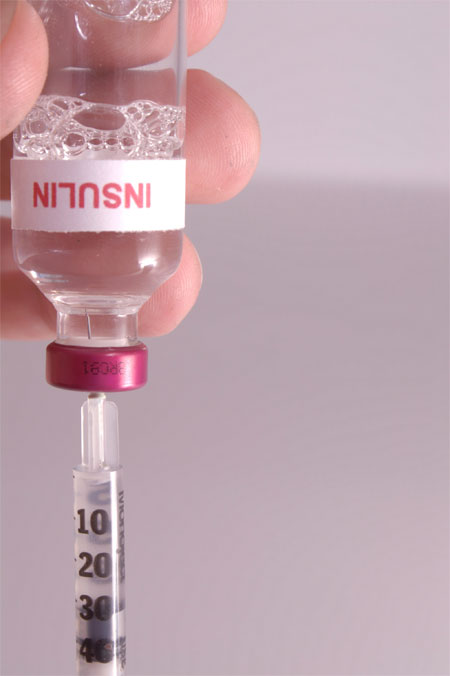
The journey to find the perfect heart involves lots of research, and in research we make discoveries. Take the case of diabetes, where not much was known about the disease, and was often referred to as the “sugar sickness”. Researchers Banting, Best, and their research team discovered insulin. Insulin explained the disease and the cure. It was discovered through testing of blood sugar and extractions from the pancreas that began to work miracles on diabetics, who would have otherwise died. Although not part of the digestive, circulatory or respiratory system, bionic eyes are also being developed to help the blind.

An article in 2003, stated that putting in electronics into the eye, a corrosive environment, could be a problem. Devices that are not biocompatible could cause major tissue reactions. But with technology advancements and research, some predict that the eyes could be fully ready by 2011. In a recent article, a toddler’s parents are fighting for an artificial cornea to save their daughters life, who could be blind before the age of 3. Technology really does improve our knowledge of how the human body works and all its internal components. But like all good things, technological “cures” should only be used on patients who need it, instead of people who want to be perfect or superhuman.
But aside from the main topic, all this talk about the future of technology, with bionic eyes, artificial hearts, bionic limbs…artificial everything really got me thinking. Some fictitious stories talk about the future—of a battle between the human race and robots. Something that I’ve never thought of was Who’s side am I going to be on? With the advancements in technologies, we just might be those robots (well probably not us, but further down the family tree). That scares me, despite that it would so cool to be a real Transformer! All these idioms we use in today’s society would take on a whole new meaning. Your heart is artificial, so what could you possibly feel there? You would not be looking into the eyes of the one you love, but into a silicon chip. Would we really be human? From all these articles about the heart, I’ve realized that the best is natural, and nothing can really beat the human heart, SO TAKE CARE OF YOURSELF AND BE SURE TO EAT YOUR VEGETABLES!
Sources
http://www.nytimes.com/1985/08/30/us/arizona- man-gets-artificial-heart.html
http://pqasb.pqarchiver.com/chicagotribune/access/25074334.html? dids=25074334:25074334&FMT=ABS&FMTS=ABS:FT&type=current&date=Nov+15%2C+1985&author=Chicago+Tribune+wires&pub=Chicago+Tribune+(pre-1997+Fulltext)&desc=1ST+TO+GET+PENN+STATE+HEART+DIES&pqatl=go
http://pqasb.pqarchiver.com/latimes/access/679785852.html?dids=679785852:679785852&FMT=ABS&FMTS=ABS:AI&type=historic&date=Mar+24%2C+1983&author=&pub=Los+Angeles+Times&desc=First+Recipient+of+Artificial+Heart+Dies&pqatl=google
http://www.mirror.co.uk/news/top-stories/2010/02/16/to-s-bionic-bid-to-beat-blindness-115875-22045883/
http://www.wired.com/medtech/health/news/2003/07/59634>

i hope i get an answer but can you sent me an email on: lesen.mit.cupcatz@gmail.com
ReplyDeletei want to ask u something about the skip beat live action^^